

Join Robert for a live 12-week video course as he introduces you to trailblazing dreamers across cultures who offer new ways to access your higher spiritual capacities — and uncover a richer, deeper, more expansive life. You’ll learn ancient practices, tools, and insights from ancient traditions around the world.
As you connect with these timeless dreamwork traditions that span diverse cultures and lineages, you’ll become part of a new dreaming society, says Robert, in which we all share our dreams and rely on them — not only for the health of the body, mind, and soul, but also for our ability to evolve and find joy during these pivotal times.
In this 12-week transformational intensive, Robert will guide you through the fundamental skills and competencies you’ll need to let your dreams manifest your soul’s desires through the lens of different lineages.
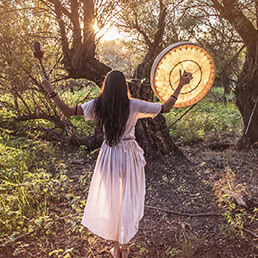
The words for “dream,” “soul,” and “shaman” in Indigenous languages often reflect how dreaming means traveling beyond the body. These terms also reveal that the true shaman is, first and last, a dreamer who can shift consciousness and visit different worlds at will.
Among the Makiritare of Venezuela, the word for dream is adekat o, which means a journey of the soul. The Kwakiutl say that dreams are news the soul brings when it comes back from its outings. The Mohawk word for a shaman is ratetshents, which means “one who dreams.”
Shamans typically receive their calling in dreams and are initiated and trained in the dreamtime.
The heart of their practice is the intentional dream journey. They may incubate dreams to diagnose a patient and select the appropriate treatment. They travel — wide awake and lucid — in their dream bodies to find lost souls, intercede with the spirits, fight sorcerers, and guide spirits of the departed along the right roads.
As you embark on your own 12-module adventure along the many roads of dreaming, Robert will offer essential tools and resources, encouraging you to go to a place of sanctuary and healing deep in your imagination — a place you can visit anytime to raise your energy and feel rooted and protected.
In this first module, you’ll:
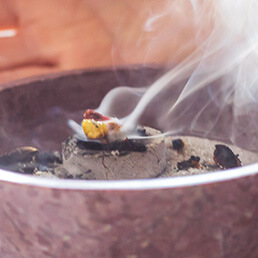
Australia’s First People believe we dream our way into this world and dream our way out of it.
They look to dreams as the place of encounter with spiritual guides and sacred healers — who often appear as totem animals, but may come in many other forms.
You’ll discover how, in the Aboriginal tradition, dreaming is a highly social activity. You get out and about, make visits, and receive visitations.
As Robert will explain, the first questions to ask about a dream are those of a detective, rather than an analyst: who, what, where, why, when?
Our lives follow Dreaming Tracks, or Songlines. We travel through “countries of belonging.” Those who can hear the inner songs of the land can cross a thousand miles of desert without maps.
In this module, you’ll explore:

In the Mohawk language, the word for shaman or healer is ratetshents, which means “dreamer.”
Robert’s life was changed by his visionary encounters with the ancient Mohawk shaman and Mother of the Wolf Clan who he calls Island Woman. In her tradition, dreams reveal the “secret wishes of the soul” — and the daily task of the community is to gather round a dreamer, help her recognize what the soul is saying, and then take action to honor the soul’s purpose.
In Native American tradition, dreaming is also about human survival. Dreams show us what’s happening at a distance in time or space. If you see a future event you don’t like, you can take action to avoid that possible future.
Dreaming is a way of connecting with the ancestors and of looking at the consequences of human actions, down to the seventh generation beyond ourselves — as the Iroquois insist that wise leaders must always do.
In this module, you’ll learn how to:

The ancient Egyptians understood that in dreams, our eyes are opened. Their word for dream, rswt, also means “awakening” and was written with a symbol representing an open eye.
By recalling and working with dreams, we develop the art of memory — tapping into knowledge that belonged to us before we entered this life journey.
The Egyptians developed an advanced practice of conscious dream travel. Trained dreamers operated as seers, remote viewers, and telepaths — advising on state and military strategy and providing a mental communications network between far-flung temples and administrative centers.
They also practiced shapeshifting, crossing time and space in the dream bodies of birds and animals.
You’ll visit the dream school of Anubis, patron of astral travel and the gatekeeper between the realms of the living and the dead — using shamanic drumming to power your direct experience of what is possible.
In this module, you’ll explore:
When they needed healing, the peoples of the Greco-Roman world often turned to Asklepios (Aesculapius to the Romans), “the kindest of gods to humans,” and his divine family.
The cult popularized dream incubation, which flourished for more than a thousand years, from as far east as modern Ankara to as far west as the British Isles.
The practice of Asklepian healing begins as a quest. You go on a pilgrimage, when you have failed to find other remedies for what ails you. The temple helpers will ask you about your dreams as they look for a dream of invitation, noting when the caliber of your dreams indicates that you’re ready for the big experience.
Contact with animals and animal spirits is a vital part of this tradition. The snake is a primary healing ally of Asklepios.
You’ll also learn how Galen the physician used dreams for diagnosis, how the famous dream interpreter Artemidorus read dreams of the future, and how the dedicated dream journalist Aelius Aristides talked and walked with his gods of healing.
In this module, you’ll learn how to:
I will find out where she has gone,
And kiss her lips and take her hands;
And walk among long dappled grass,
And pluck till time and times are done
The silver apples of the moon,
The golden apples of the sun.
— W.B. Yeats, “The Song of Wandering Aengus”
In Ireland, they call it going away. The world seems cold or cruel or indifferent, so a vital part of you leaves the body — or is lured away — and goes to live in another world, in a realm of Faeries or in a garden behind the moon…
People in the ordinary world may not notice anything is gone from you — but you’re missing something that you need to be whole, to live fully, and to create.
Robert will guide you to sample some of the ever-living Celtic wonder tales that speak of soul and dreaming and lands of the heart’s desire. You’ll journey to places of healing, like the sacred spring of Sequana, the Fast-Flowing One, at the source of the River Seine.
You’ll follow the deer tracks of Elen, goddess of the Ways. Robert will share a story from the Mabinogion about how your dreams may give you a map to manifest the wishes of your soul — and carry you to your beloved.
The roads of enchantment in this module will include:

Gabriel is the archangel of dreams for all three peoples of the Book — Jews, Christians, and Muslims.
The Jewish mystical text, the Zohar, identifies Gabriel as both the Master of Dreams and as the angel who mentors the soul before birth. In this conception, the bringer of dreams is also the source of the soul’s knowledge of its destiny and its place in the order of creation.
In the Christian story, Gabriel is the angel of the Annunciation. He appears to Mary to announce the coming of Christ, as he formerly appeared to Zacharias to announce the coming of John the Baptist.
In a Celtic blessing, he is called “the seer of the Virgin.”
The whole of Islam hangs on Gabriel’s relationship, as dream guide, with the prophet Muhammad. The prophet said it was Gabriel (Jibril in Arabic) of the “140 pairs of wings” who dictated the Koran to him, sura by sura. It was Gabriel who escorted Muhammad on his Night Journey (miraaj ) to gain personal knowledge of higher worlds.
As Robert will share, Gabriel appeared during a critical passage in his own life. While walking in bright sunlight on a dusty farm road beside a cornfield, he had a clear vision of Gabriel. The angel’s beauty was so great, he thought of him/her as feminine more than masculine…
Robert will share “Song for Gabriel,” the poem he wrote about that encounter.
Together, you’ll lay the foundations for a journey of ascension as you explore:
China has rich traditions of dream understanding and practice — shamanic and Daoist, Buddhist and Confucian — ranging from reading dream messages about the future to engaging in nightly journeys to otherworld realms and calling in dakinis and star beings.
Contact with the ancestors can be so powerful that physical objects are transported from one realm to another. Books and treasure texts, including a whole Buddhist sutra, are delivered from the dreamscape.
Robert will guide you to look at the “perfected sleep” practices of the Daoist master Chen Tuan (871-989), credited with creating kung fu and pursuing many far journeys beyond the body.
Drawing on a cornucopia of wildly exciting stories and meditation practices, you’ll learn how:

In the mind of India, Vishnu is dreaming this world, which will continue until he ends the dream and disperses his dream characters — including you.
The god with skin the color of rain-filled clouds sleeps on a great serpent, drifting on the Ocean of Milk. While Vishnu sleeps, his mind generates dreams — and this is the stuff that you, and our world, are made of.
A Sanskrit name for dream travelers, kamacarin, means “those who can transfer themselves at will.” The sacred writings of India are a treasury of tales of dream travel, grounded on experience. In this session, we’ll explore the teachings of the Yoga Vasistha, where dream travelers find that time is elastic. You may live a hundred years in a dream world and return to find that only a day has passed in ordinary time.
What’s experienced in dream worlds is real and has real consequences in the traveler’s waking world. Spiritual apprenticeship and initiation can take place in this way.
In this module, you’ll learn that:
Tibetan Bon/Buddhist teachers of dream yoga say the best perspective for lucid dreaming is to consider all of life a dream. They also say that the yoga of dream and sleep is the best preparation for dying.
These teachers emphasize developing the practice of dream yoga for self-liberation from “karmic traces” and the manacles of “grasping and aversion” to enter the clear light. They also value the practical benefits of dreaming. In “dreams of clarity” you can visit people at a distance, see across time and space, and entertain deities and dakinis.
It’s possible to borrow from these traditions without adopting their religious elements. Everyday dream yoga is available to you — if you follow the counsel of Tinker Bell. In the movie Hook, she tells Peter Pan, “You know that place between sleep and awake, the place where you can still remember dreaming? That’s where I’ll always love you. That’s where I’ll be waiting.”
You’ll explore how the fertile space of hypnagogia (the transitional state between wakefulness and sleep) has led to breakthroughs and solutions in nearly every field, including science. You can place yourself in a state of horizontal meditation and progress towards the continuity of awareness, which is a primary goal of advanced practitioners of dream yoga.
In this module, you’ll discover:

Seth deserves his own place in a course devoted to the great dreaming traditions. Seth, a multidimensional teacher channeled by Jane Roberts, is crystal clear about the important events that happen while you’re dreaming.
Every night in dreams, consciousness travels outside the body, according to Seth. You travel to other realities, no less real than the physical world.
You’ll explore how you can choose from an infinity of probable events while you’re dreaming. As you become a conscious dreamer, you’ll not only shape reality on other planes — you’ll engage in reality creation on the physical plane, too.
You can also tune in to parallel selves by waking up to what’s going on in your dreams.
Great creativity is a multidimensional art in which the creative mind draws on the gifts and the energy of many selves. You can borrow strength and skills from parallel selves who made different choices — and are walking the roads in the Many Worlds.
In this module, you’ll discover how:
Jung’s Red Book reveals the enormity of the price the great psychologist paid for his wisdom, and the extent of his courage and eventual self-mastery.
This is a record of a thoroughly shamanic descent to the Underworld, and of a long test and initiation in houses of darkness from which lesser minds and feebler spirits might never have managed to find their way back.
Out of the shamanic depth of his personal experience, grounded in science and scholarship and the practice of counseling, Jung crafted a depth psychology in which dreams are central.
As a dream shaman, Jung knew and insisted that dreams show us what the soul wants in life. He wrote that, “All day long I have exciting ideas and thoughts. But I take up in my work only those to which my dreams direct me.” He was perennially willing both to be mobilized by dreams and to accept course correction from them.
He formed a fertile intellectual partnership with Nobel physics laureate and quantum pioneer Wolfgang Pauli, who said that dreams were his “secret laboratory.”
Together, they developed a theory and practice of synchronicity to help us understand that mind and matter interweave everywhere in our conscious universe.
In this final class adventure, you’ll explore how to:
We feel honored that Robert Moss has chosen to partner with The Shift Network to offer this exclusive LIVE online course. This is a unique opportunity to interact directly with the creator of Active Dreaming whose powerful insights and pioneering work are helping us heal and awaken ourselves and our world.
If you’re serious about learning the secrets of the ancient dreamers across cultures, then you owe it to yourself, your loved ones, and our world to take this one-of-a-kind program.
There are no reviews yet.


You must be <a href="https://wislibrary.net/my-account/">logged in</a> to post a review.